Timbuktu, the city of 333 saints
Three mosques of earth, hundreds of thousands of manuscripts hidden in family homes, salt caravans: the notebook of a city Europe searched for over three centuries.
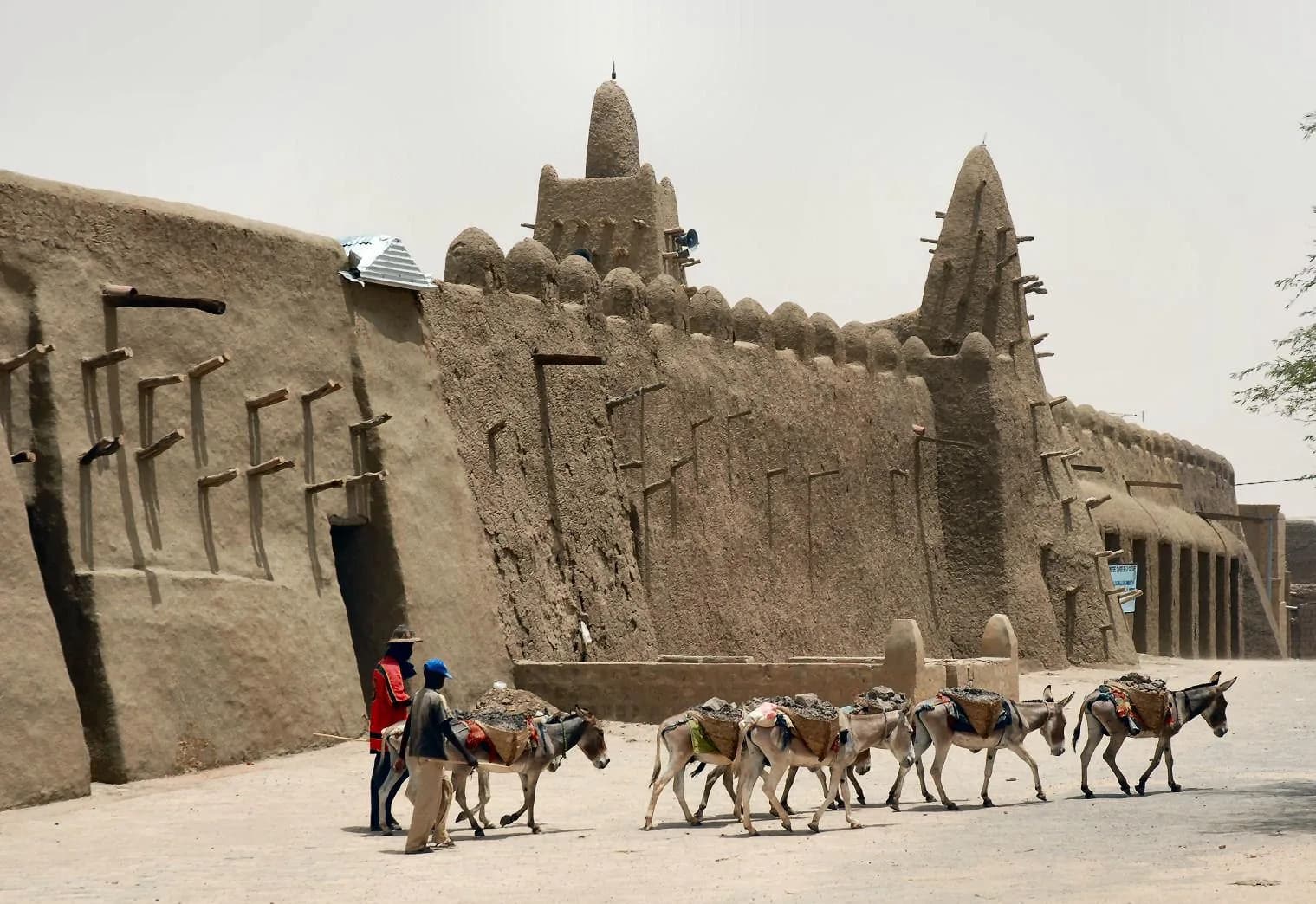
Timbuktu still has to be earned. For a long time you arrived by river, from Mopti, on a pinasse that took two or three days down the Niger to the port of Kabara, then along the sandy track that climbs to the town. You stepped out onto an unpaved street between low houses of grey mud brick with studded doors, and understood at once why the Tuareg call it ‘the distant one’: the Sahara begins here, at the end of every street, in the shape of a dune.
The city carries a nickname, that of the 333 saints buried in its mausoleums, and a reputation made by three centuries of European travellers who never set foot in it. This notebook tells what is really there: three mosques of earth, a university without walls, libraries inside houses, salt caravans that come down from the north, and a city wounded in 2012 and then repaired by its own masons.
The city at the end of the sand
Timbuktu sits a few kilometres north of the Niger, where the river makes its great bend towards the desert. That position made it: in the 12th century a seasonal Tuareg camp became a permanent market where Saharan salt met the gold, slaves and ivory that came up from the south. Everything that crossed the desert passed through here, and with the goods came the scholars.
Today’s town keeps that old plan: streets of sand, courtyard houses of banco, the raw earth mixed with straw, and carved wooden doors studded with iron, the finest of them from Morocco. In the evening, when the heat drops, the light turns russet, shadows lengthen on the walls, and children play football on squares of fine sand.
Sand is also the enemy. The dunes advance, harmattan storms lay their dust over everything, and the masons spend part of the year repairing what the wind undoes. The town has some eighty thousand inhabitants, Songhai, Tuareg, Arab and Fulani, who speak Koyra Chiini, the Songhai language of Timbuktu, Tamasheq and Arabic.
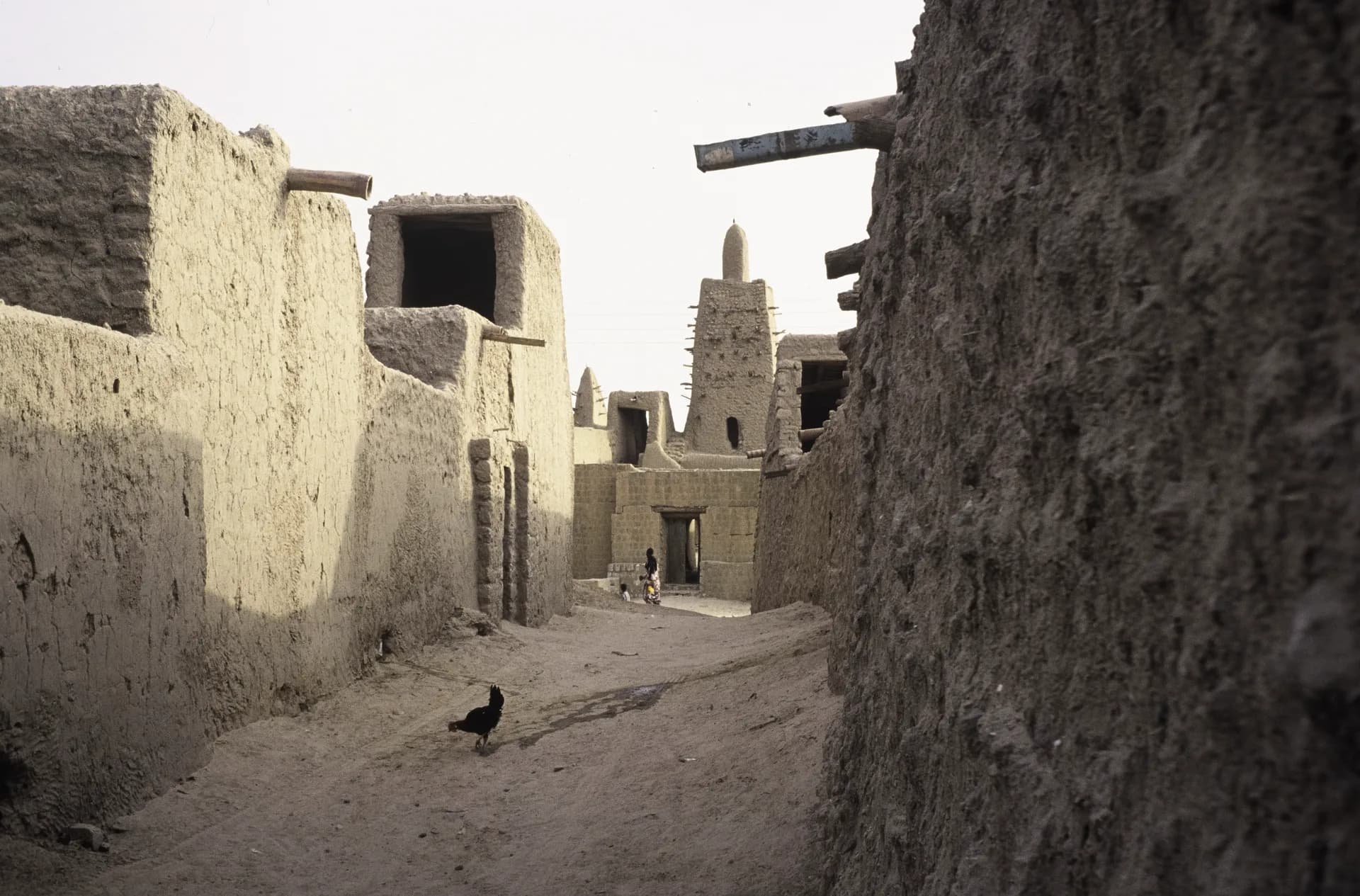
Three mosques and a university without walls
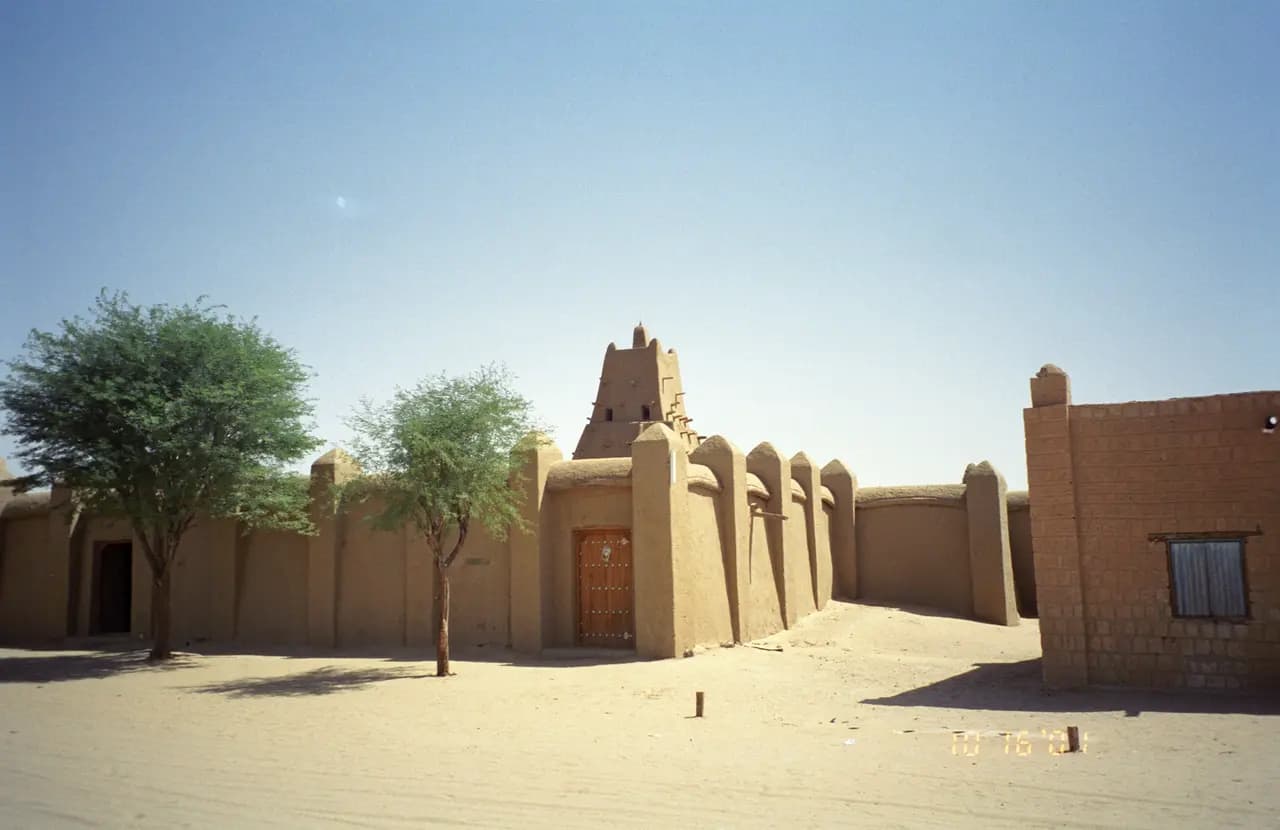
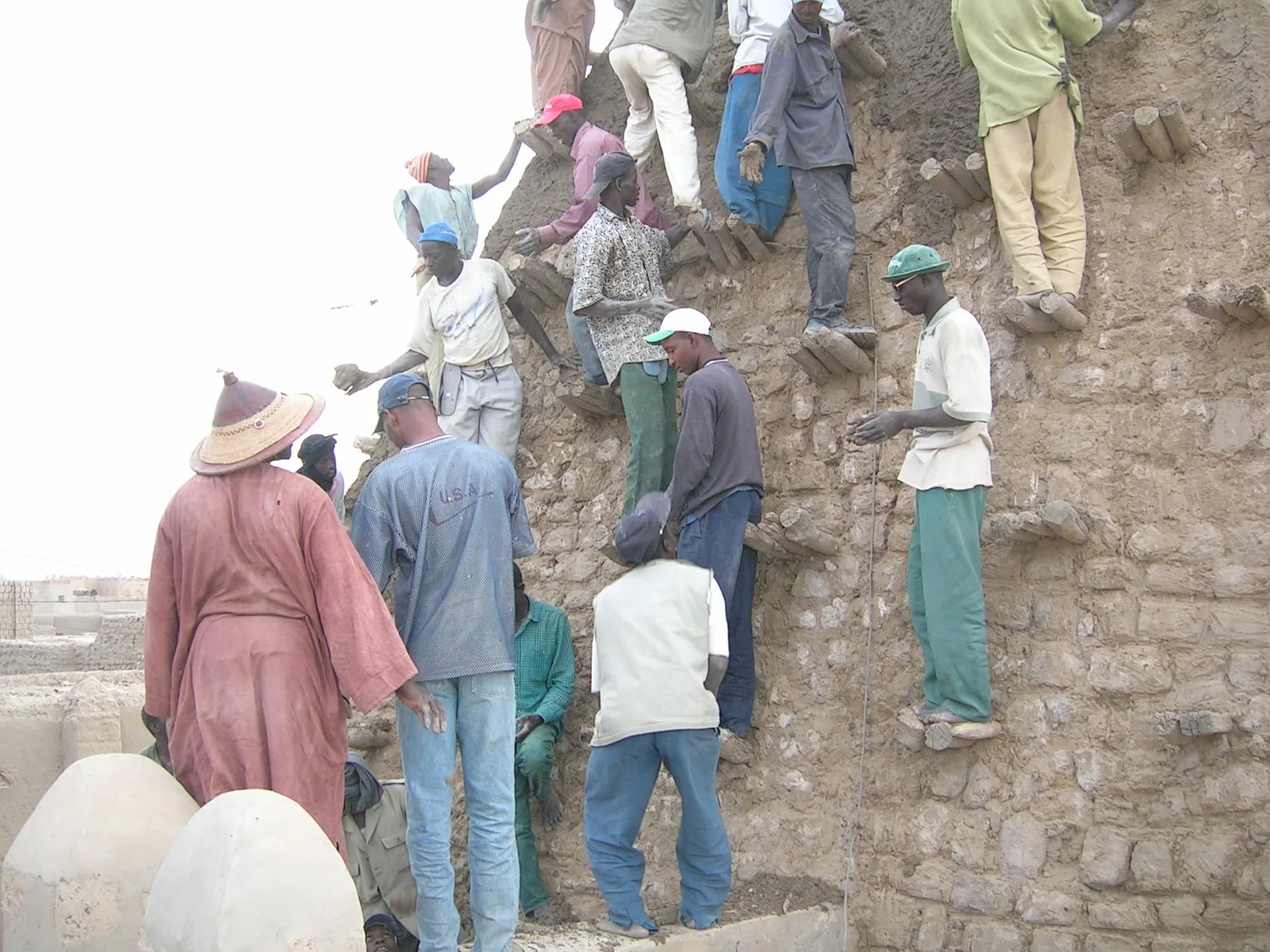
Djinguereber, the great mosque, dates from 1327. It was raised on the return from pilgrimage of Mansa Musa, the emperor of Mali whose passage through Cairo sent the price of gold tumbling, and tradition credits its plan to the Andalusian architect Abu Ishaq al-Sahili. It is a forest of earthen pillars under a low ceiling, open onto a sand courtyard, topped by pyramidal minarets bristling with wooden beams: those protruding stakes serve as permanent scaffolding for the masons who re-plaster the façade.
Sankoré, in the north of the town, is the scholars’ mosque: founded in the 14th or 15th century, it was the centre of a teaching tradition that drew students from across the Muslim world. Sidi Yahya, the third, was built between 1400 and 1440; its door, which legend said would open only at the end of time, was torn off in 2012 and has since been remade.
People speak of the ‘University of Timbuktu’, but there was never a campus or a register: masters taught at home or in the mosques, each with his own students, law, grammar, astronomy, medicine, logic. In the 16th century, according to the chronicles, the town had dozens of these schools and thousands of students, and books sold for more than any other merchandise.
The manuscripts: a library inside the houses
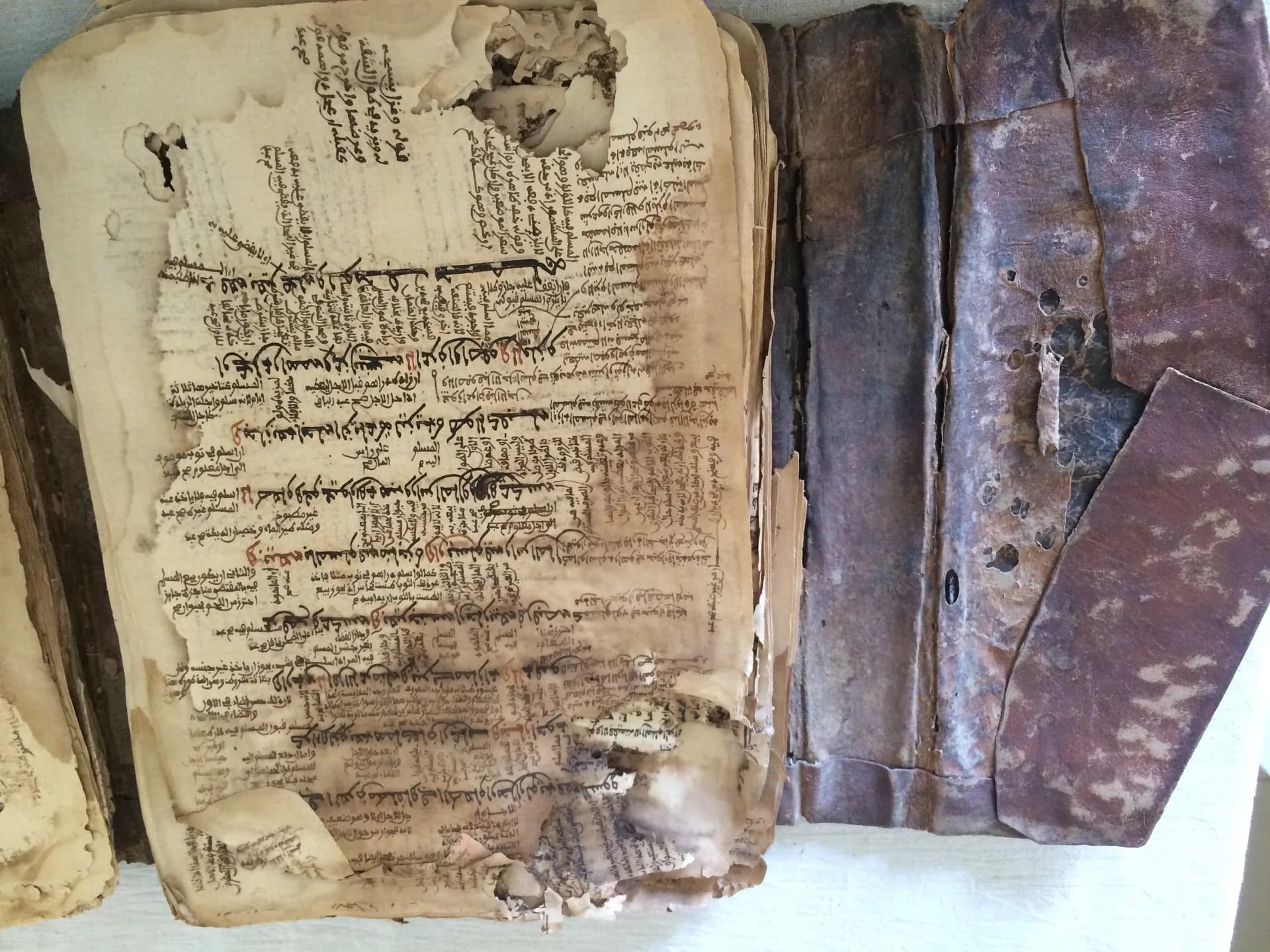
Timbuktu’s treasure cannot be visited like a monument: it sits in family chests. Hundreds of thousands of manuscripts, from the 13th to the 20th century, written in Arabic but also in Fula, Songhai, Tamasheq and Bambara transcribed in Arabic letters, known as Ajami. Treatises on law, astronomy, medicine and mathematics, poems, sale contracts, merchants’ letters, fatwas on slavery, remedies for infertility.
For centuries these texts passed from father to son, hidden under floors during the Moroccan conquest of 1591, during colonisation, during droughts. The Ahmed Baba Institute, founded in 1973 with Kuwaiti support and named after the town’s most famous scholar, began to gather, restore and digitise them; other family libraries opened their doors.
In 2012, when armed groups took the town, the librarians chose silence: night after night they slipped the manuscripts into metal trunks, loaded them onto carts, pirogues and lorries, and sent them to Bamako, a thousand kilometres south. Some 350,000 manuscripts were saved that way; 4,203 were burned or stolen. It is one of the great cultural rescues of this century, carried out without uniforms and without noise.
The golden age, and those who searched for it
The peak came with the Songhai Empire, which took the town in 1468 and whose rulers, the Askias, protected the scholars. It was then that Leo Africanus, an Andalusian diplomat passing through, described a town of judges, doctors and men of letters maintained at the king’s expense, and a trade in books more profitable than any other. His account, published in Italy in 1526, fixed in European minds the image of a city of gold.
The golden age ended brutally in 1591: a Moroccan army armed with arquebuses crushed the Songhai at Tondibi, occupied Timbuktu and deported its scholars, Ahmed Baba among them, to Marrakesh. The soldiers’ descendants, the Arma, ran the town for two centuries. Trans-Saharan trade declined in favour of the Atlantic ports.
Europe, meanwhile, kept dreaming. In 1826 the Scot Gordon Laing reached the town and was murdered on leaving it. In 1828 the Frenchman René Caillié entered disguised as a Muslim, spent two weeks there and came back alive, the first European to do so: he described a poor town of earth, and the Société de Géographie paid him its prize. A quarter of a century later the German Heinrich Barth stayed for months, read the local chronicles and understood what Caillié had not seen: Timbuktu’s wealth was in its books.
The salt that comes from the north
Timbuktu is first of all a salt port. At Taoudenni, 664 kilometres due north, in absolute desert, men cut slabs of salt by hand from the bed of an ancient lake. These slabs, grey, veined, the size of a door, come down to the town on camelback: this is the azalai, the caravan, which leaves after the great heat and takes several weeks each way.
Lorries have replaced some of the camels, but the caravan still exists, one of the last in the Sahara. You see it arrive at the end of the year, hundreds of animals strung out along the track, and the salt slabs pile up in the market before leaving again, by river, for the whole country. Taoudenni salt is recognised by its striations; it is broken with a hammer and sold by weight.
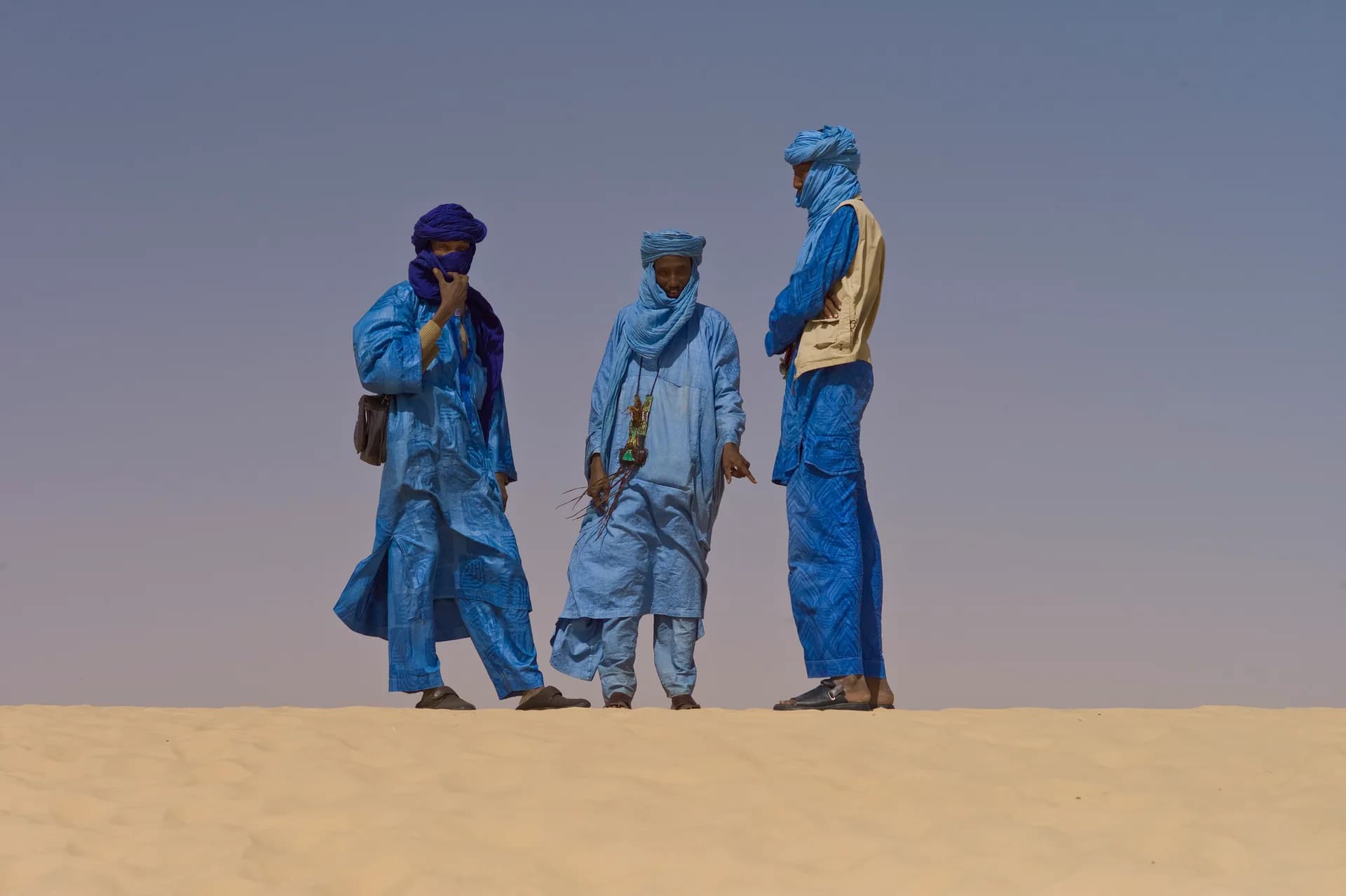
Desert life is found in the Tuareg camps at the town’s edge: leather tents, tea served in three glasses, bitter then sweet, camels groaning at dusk. And in the music: this region, Niafunké downstream, was the home of Ali Farka Touré, and it was in the dunes of Essakane, two hours away by track, that the Festival au Désert was held from 2003 to 2009, bringing the whole world to hear the blues of the Sahara.
2012: the city wounded, then repaired
In April 2012 Timbuktu fell to armed groups. The occupiers attacked the saints’ mausoleums, which they deemed idolatrous: fourteen of the sixteen mausoleums on the World Heritage List were destroyed with pickaxes, the sacred door of Sidi Yahya was torn off, manuscripts were burned. UNESCO placed the town back on the List of World Heritage in Danger, where it had already stood from 1990 to 2005 because of the sand.
Rebuilding was the work of Timbuktu’s masons. From 2014 the masons’ guild, keeper of the banco techniques, rebuilt the mausoleums stone by stone, on the exact spot, with the original materials, under the supervision of UNESCO and the guardian families. In 2016, for the first time, the International Criminal Court convicted a man, Ahmad al-Faqi al-Mahdi, for the destruction of cultural property: nine years in prison, and a precedent for the heritage of the whole world.
The manuscripts, for the most part, stayed in Bamako, where they are being restored, catalogued and digitised. A part of Timbuktu therefore lives far from Timbuktu, and that is perhaps the only good thing to be said about this decade: the town showed that walls can be destroyed, but not a memory.
Timbuktu today
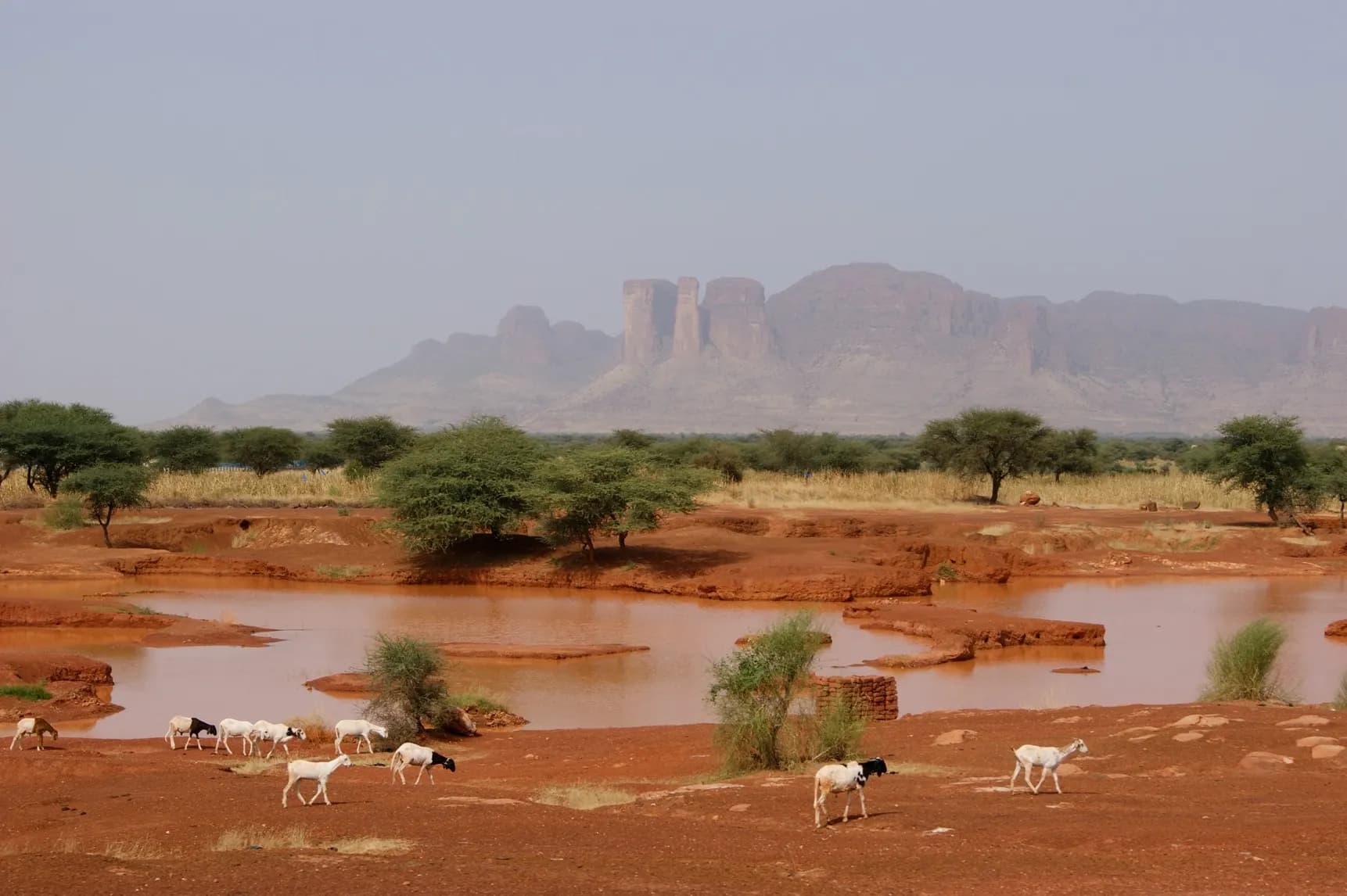
It must be said plainly: northern Mali is closed to travellers. The French authorities formally advise against all travel to the region, where armed groups remain active; the town endured a blockade in 2023, and the Festival au Désert has not been held since 2012. Our Mali guide carries the current official advice, and this notebook invites nobody to get around it.
What it does invite you to do is to know. The digitised manuscripts can be read online, exhibitions take them travelling, the music of the desert has never stopped playing. Timbuktu was a European idea for three centuries before it was a real town; today, by force of circumstance, it is again a place visited first through books. Until the pinasse leaves Mopti once more.
Sources · 11
The journal
Keep reading.
Meroë, the pyramids of the other Nile
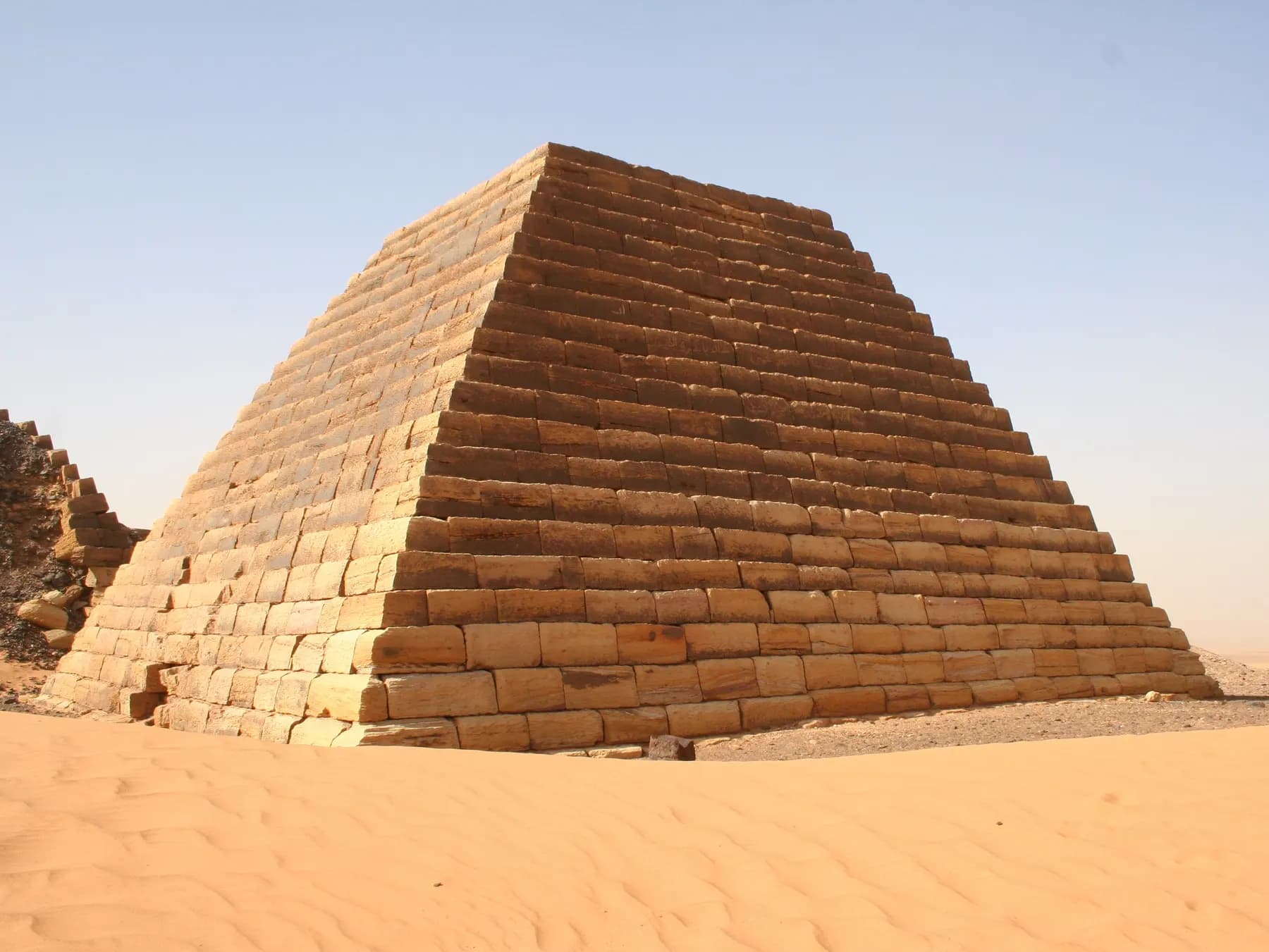
Two hundred pyramids in the Sudanese sand, a kingdom that stood up to Rome, warrior queens and a treasure hunter: the Kush notebook.
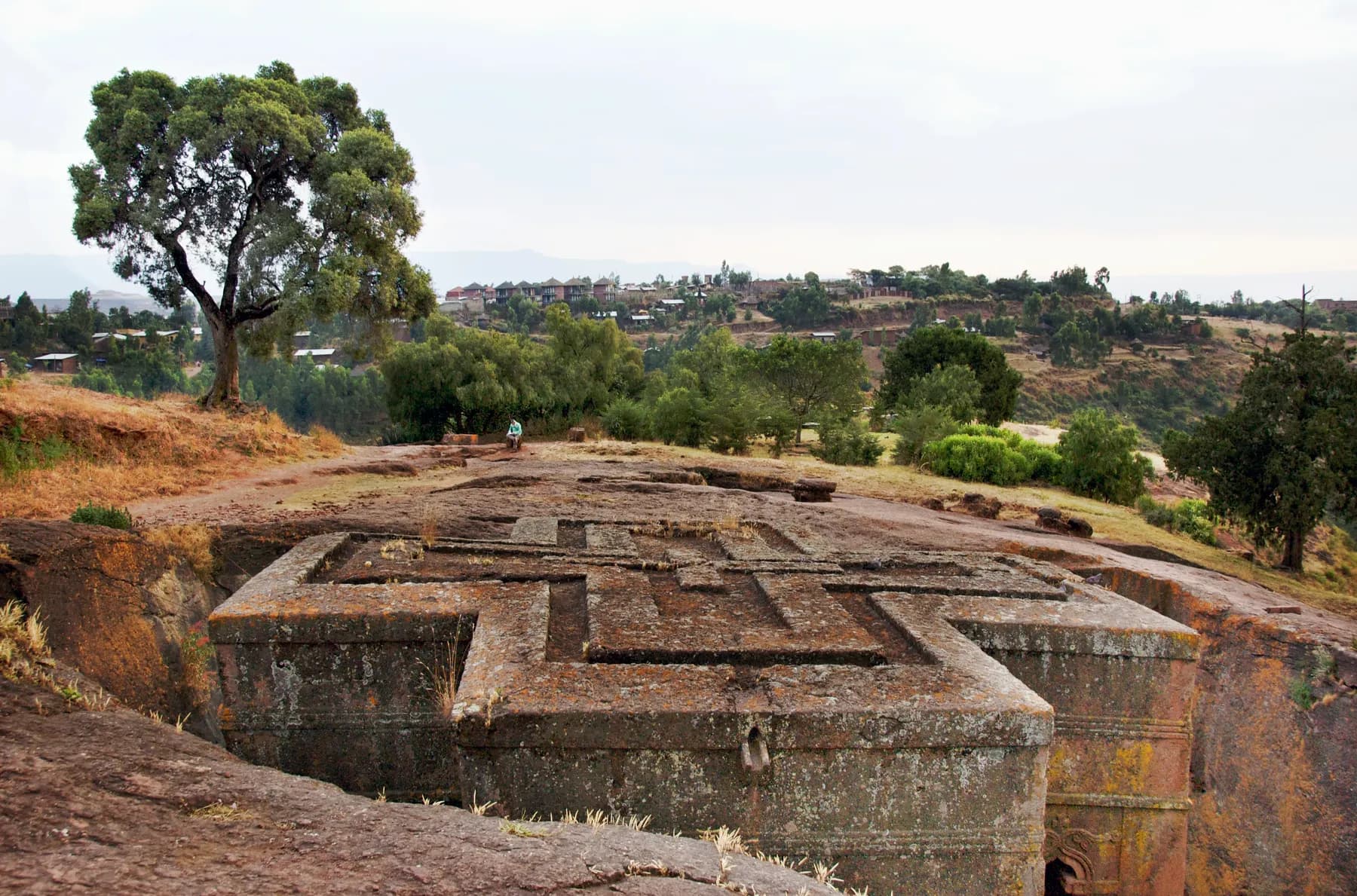
Lalibela, the town carved towards the sky
Eleven churches cut into living rock, a king who wanted his own Jerusalem, pilgrims in white at dawn: a notebook at 2,500 metres.
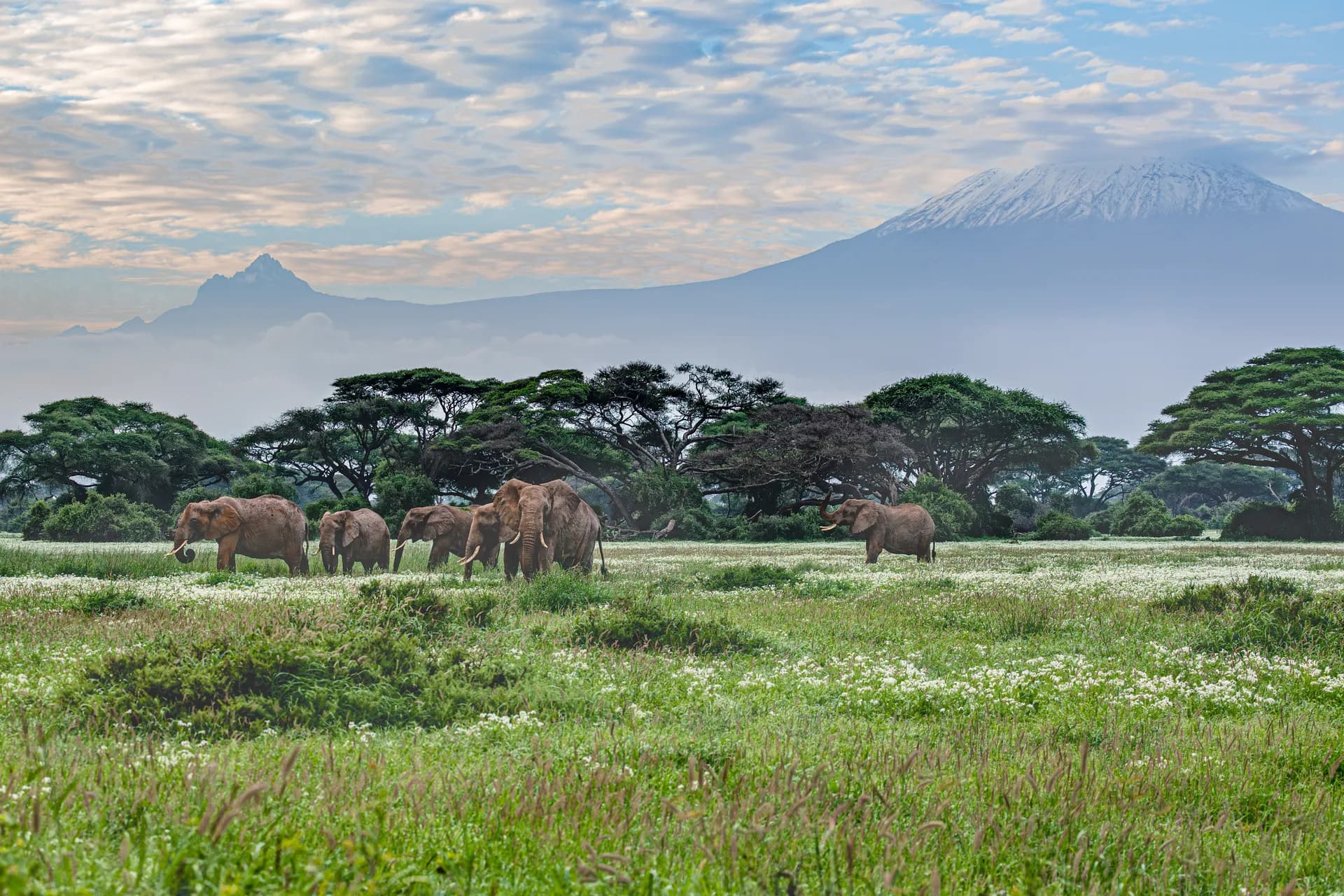
Kilimanjaro, five climates up to the snow
The roof of Africa is climbed on foot, without a rope, in a week: the story of an ascent, from the Chagga banana groves to the last glaciers.