Lalibela, the town carved towards the sky
Eleven churches cut into living rock, a king who wanted his own Jerusalem, pilgrims in white at dawn: a notebook at 2,500 metres.
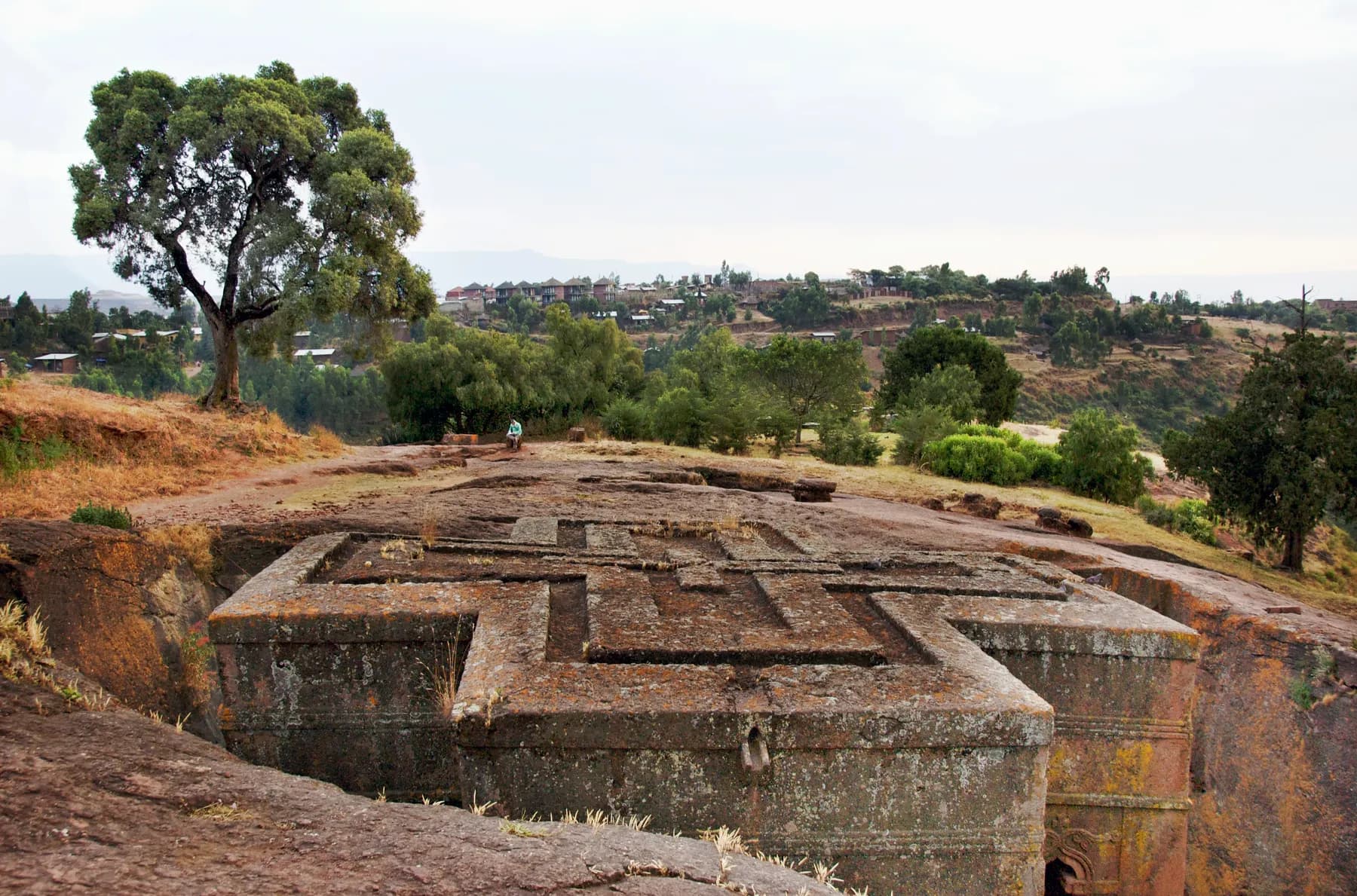
You do not see Lalibela when you arrive. The road climbs onto the plateau, the town spreads over its russet hill, eucalyptus, tin roofs, a market, and nothing suggests that eleven churches lie beneath your feet. That is the point of the place: the churches of Lalibela were not built, they were dug. The makers cut a trench into the volcanic tuff, freed a block, then hollowed that block out from within, windows, columns, vaults and altars included. So you have to walk to the edge of a pit to discover, twelve metres below, a roof carved with a cross.
This notebook follows the order of a day on site: the descent to the first church, the story of the king who gave the town its name, the route through the two groups and the lone cross, then what makes Lalibela something other than an archaeological site: a working holy town, where Christmas is still celebrated on 7 January in front of tens of thousands of pilgrims.
Down to the first church
The visit almost always begins with Bete Medhane Alem, the House of the Saviour of the World. You follow a trench, go down a few steps, and the block appears: a church the size of a basilica, ringed by a colonnade cut from the same rock, generally held to be the largest monolithic church in the world. Inside, light falls from high windows onto rows of pillars, the floor is covered in carpets, and a priest keeps the Lalibela Cross, a bronze processional cross that has become the emblem of the town.
The rock is dark red, veined with grey, soft to the touch where centuries of hands have polished it. You take your shoes off at every door: the churches are consecrated, and the floor inside is a place of prayer before it is a museum floor. Thick socks, a bag for your shoes and a little patience at the narrow doorways change the day.
Altitude does the rest. Lalibela sits at around 2,500 metres: breath shortens on the stairs, the sun bites from mid-morning, and that is a good reason to adopt the pace of the place, slow, with pauses in the shade of the trenches.
The king who wanted a Jerusalem
The town was called Roha. It took the name of Gebre Meskel Lalibela, a king of the Zagwe dynasty who reigned from about 1181 to 1221 and to whom tradition credits the whole undertaking. The story goes that he wanted to give his subjects a substitute Jerusalem, at a time when the pilgrimage to the real one had become perilous: some historians link the project to Saladin’s capture of Jerusalem in 1187.
The place names say as much. The river that separates the two groups of churches is called Yordanos, the Jordan. One church is named Golgotha, another Bethlehem. The symbol was plain: to walk through Lalibela is to walk the Holy Land without leaving the highlands.
Tradition holds that the churches were carved in twenty-four years, men working by day and angels by night. Archaeologists date the various churches between the 7th and 13th centuries, with successive reworkings: some probably began as fortresses or palaces before being consecrated. The two accounts live side by side in Lalibela without friction, and the priests happily tell the first.
Two groups, tunnels and a cross
The eleven churches form two groups linked by trenches and tunnels, plus one church set apart. The northern group, around Bete Medhane Alem, includes Bete Maryam, the oldest by tradition, with its paintings and its veiled pillar, then Bete Golgotha, where the tomb attributed to King Lalibela is shown, and the small Bete Meskel and Bete Danaghel.
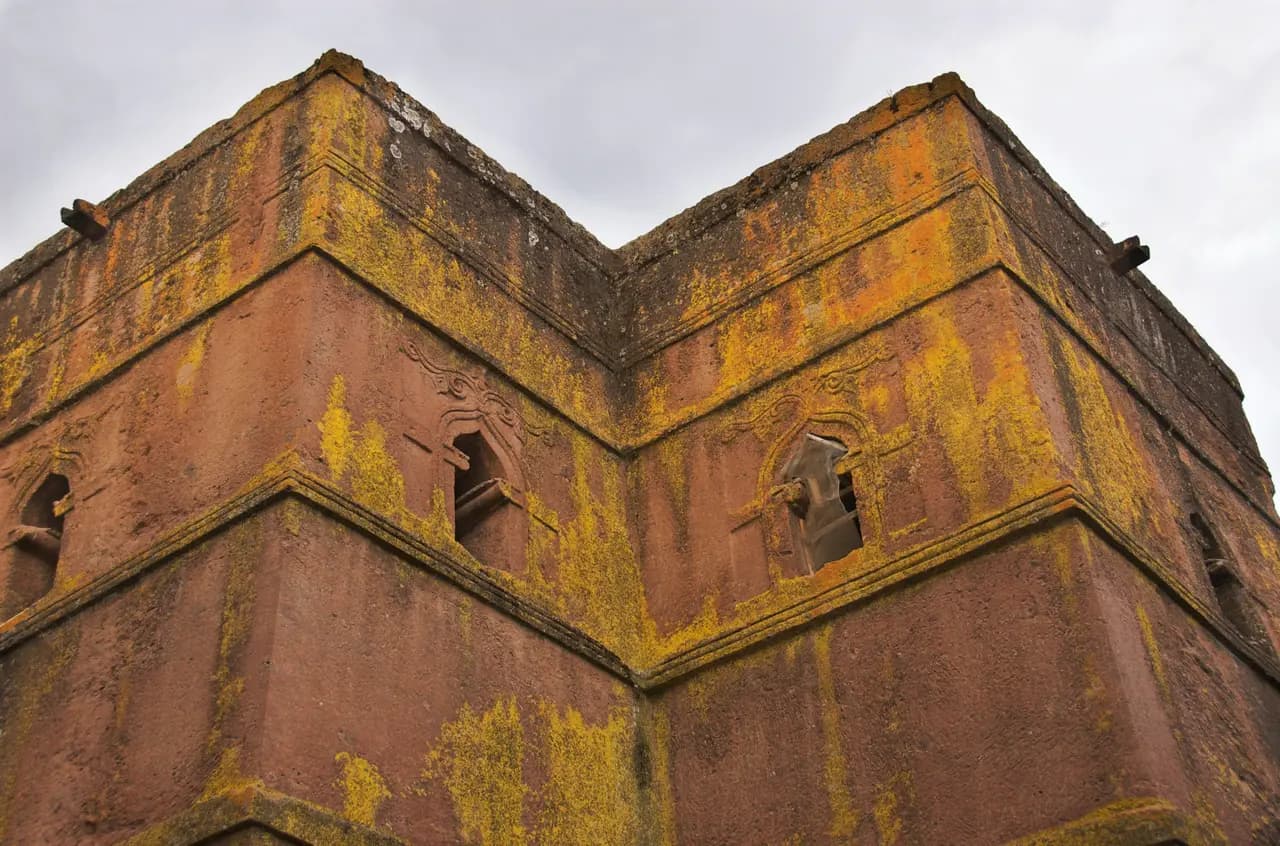
The eastern group is more intimate: Bete Emmanuel, its façades patterned like the palaces of Aksum, Bete Merkorios, Bete Abba Libanos set against the cliff, and Bete Gabriel-Rufael, reached by a footbridge over a pit. Between the two groups, a tunnel in complete darkness is walked by feeling the wall: guides call it the passage from hell to heaven, and you come out into the light.
Then comes Bete Giyorgis, Saint George, on its own. Seen from above it is a perfect Greek cross, carved downwards into an isolated block some twelve metres high, its roof bearing three nested crosses. You walk around it along the rim of the pit before descending through a sloping trench. In the early morning, when the sun skims the plateau, it is the most beautiful image in Ethiopia, and the most photographed.
A living place, not a museum
What strikes you in Lalibela, more than the technical feat, is that nothing here is frozen. The churches belong to the Ethiopian Orthodox Tewahedo Church and are used every day. Priests in white shawls read from parchment books, deacons beat the kebero, the great drum, and shake the sistrum; chants in Ge’ez, the liturgical language, rise from the pits before daybreak.
Pilgrims come from across the region, often on foot, wrapped in the shamma, the white cotton shawl. They kiss the doorposts, touch the rock, sit on the edges of the trenches. The foreign visitor is welcomed without fuss, provided they stay discreet during services and ask before photographing a face.
Two dates concentrate everything. Genna, Ethiopian Christmas, falls on 7 January: tens of thousands of pilgrims spend the night around the churches, candles in hand, and the whole town seems dressed in white. Timkat, Epiphany, on 19 January, celebrates the baptism of Christ: the tabots, replicas of the Tablets of the Law kept in every church, are carried in procession under embroidered umbrellas to the water, which is blessed and sprinkled over the crowd. On those days, rooms are booked months ahead.
Above and around: Asheten Maryam, Yemrehana Krestos
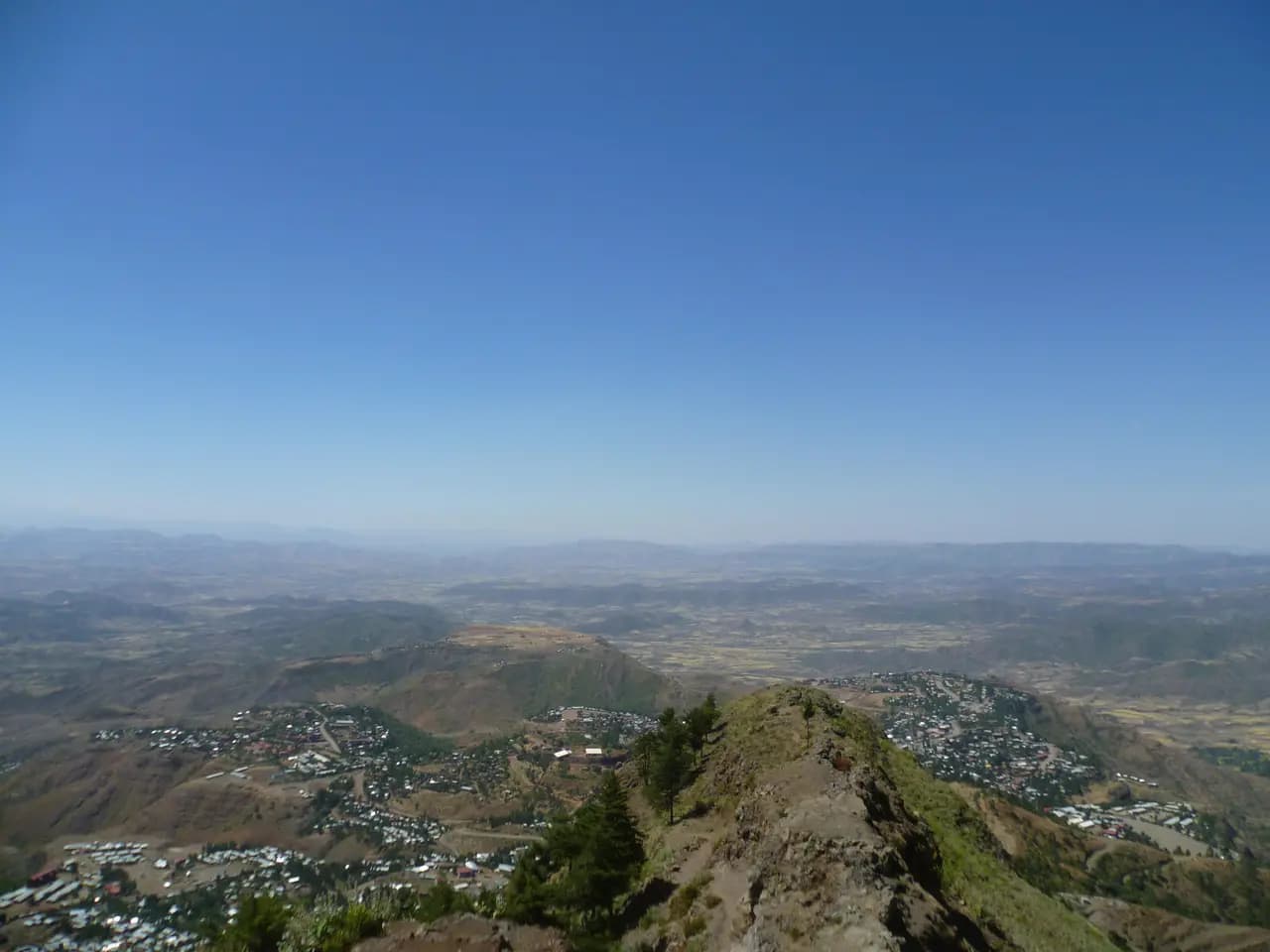
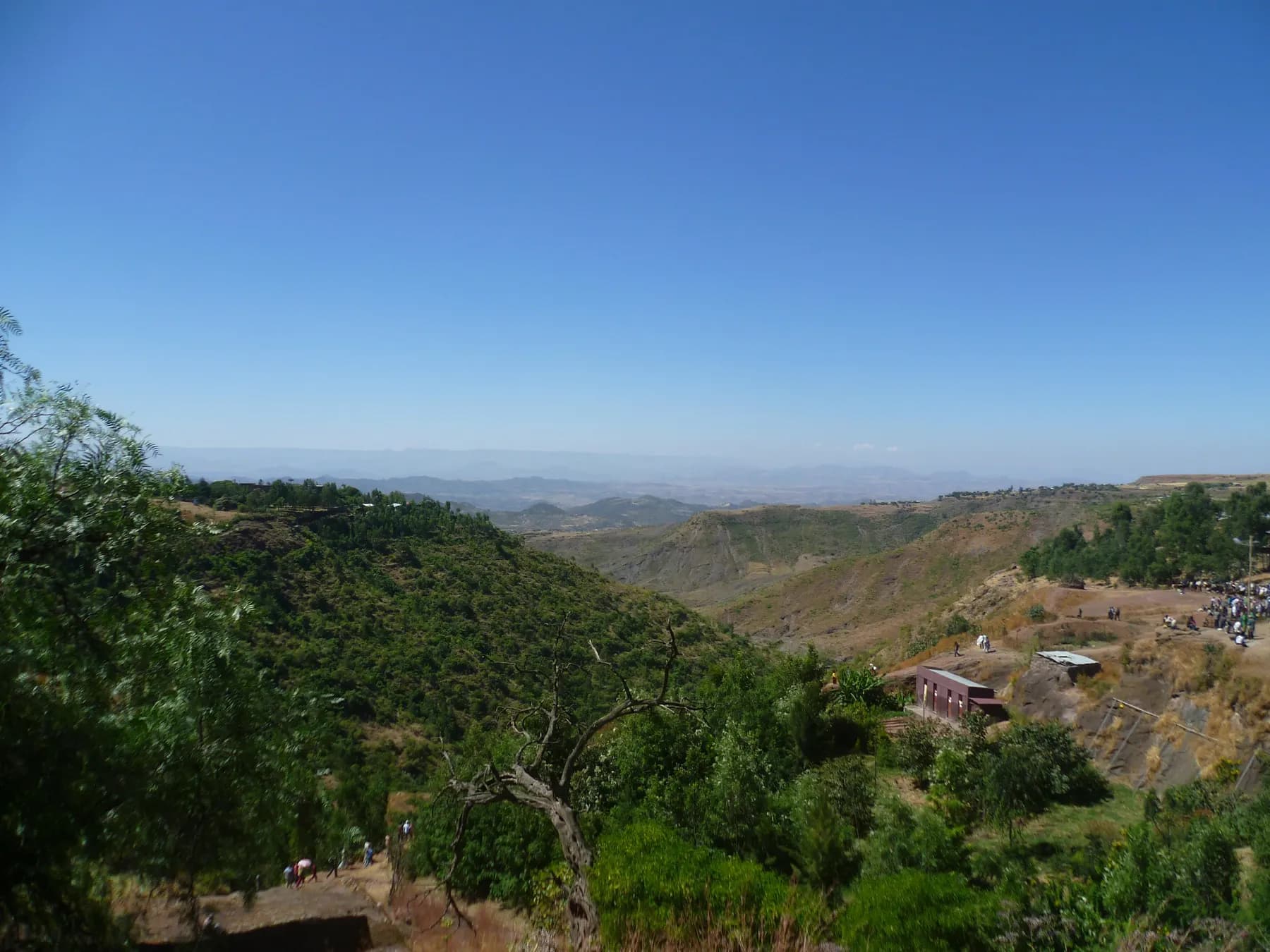
Lalibela is not only the eleven churches. On the mountain above the town, the monastery of Asheten Maryam is reached in two or three hours on foot, or by mule, at close to 3,000 metres. The church is modest, but the view takes in the whole Lasta plateau, its terraced fields and round villages.
Some forty kilometres to the north, Yemrehana Krestos is the region’s other marvel: a church built, not carved, inside a vast cave, in alternating courses of stone and timber in the Aksumite tradition, probably in the 11th or 12th century. It very likely served as a model for the builders of Lalibela. The road is a mountain track; it is a half-day trip from town.
Between the two, the landscape alone is worth the detour: amphitheatres of rock, herders and their flocks, eucalyptus that smells strong after rain, and the two-storey stone tukuls typical of Lalibela, recognisable by their conical thatched roofs.
At the table, at 2,500 metres
Meals are eaten around a large, slightly sour pancake of injera, made from teff, the grain of the highlands. Sauces are laid on it: shiro, a spiced chickpea purée, lentils, vegetables and, on feast days, doro wat, a chicken stew with berbere. On Wednesdays and Fridays, and through the long fasts, the Church prescribes abstinence from animal products: on those days the cooking is entirely plant-based, and often at its best.
The end of the day is happily spent in a tej bet, a house that serves tej, Ethiopian honey wine, in round narrow-necked flasks. And there is coffee: the buna ceremony, where the beans are roasted in front of you, ground, then brewed in a clay jebena and served in three rounds, takes the time it takes.
Two particularities unsettle the first days. Ethiopia follows its own calendar, with thirteen months, seven to eight years behind the Gregorian one. And the hours are counted from sunrise: ‘one o’clock’ means seven in the morning. For an appointment, you always say which clock you mean.
Getting there, and when
Lalibela has its own airport, a short half-hour drive from town, served from Addis Ababa by domestic flights of about an hour. The road from the capital is long, two days at least, and is sometimes combined with Gondar and the Simien Mountains in a northern circuit.
The dry season, from October to March, brings the clearest skies and passable tracks; the heavy rains fall from June to September. The entrance ticket is valid for several days, which allows you to come back at dawn and in the late afternoon, the two moments when the trenches catch the light. A local guide is invaluable for the order of the visit, the tunnels and the stories attached to each church.
The Amhara region, where Lalibela lies, has seen episodes of insecurity since 2021. Before fixing dates, check the current official advice in our Ethiopia guide and ask about the air links of the moment: it is the only part of this notebook that changes quickly.
Sources · 8
Live this journey.
Guided tours, excursions and tickets from our partner, in a new tab. Prices and availability are theirs.
The journal
Keep reading.
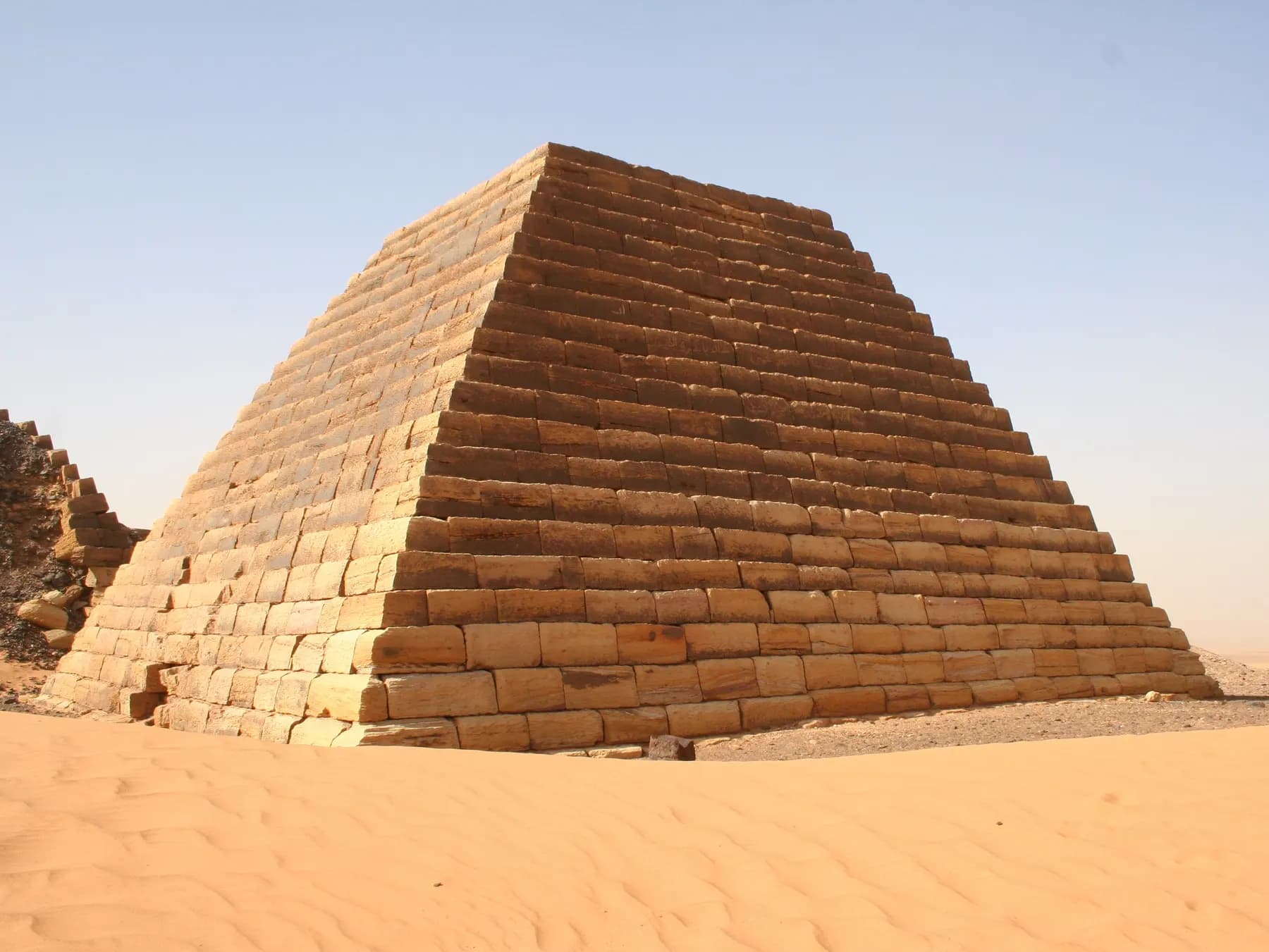
Meroë, the pyramids of the other Nile
Two hundred pyramids in the Sudanese sand, a kingdom that stood up to Rome, warrior queens and a treasure hunter: the Kush notebook.
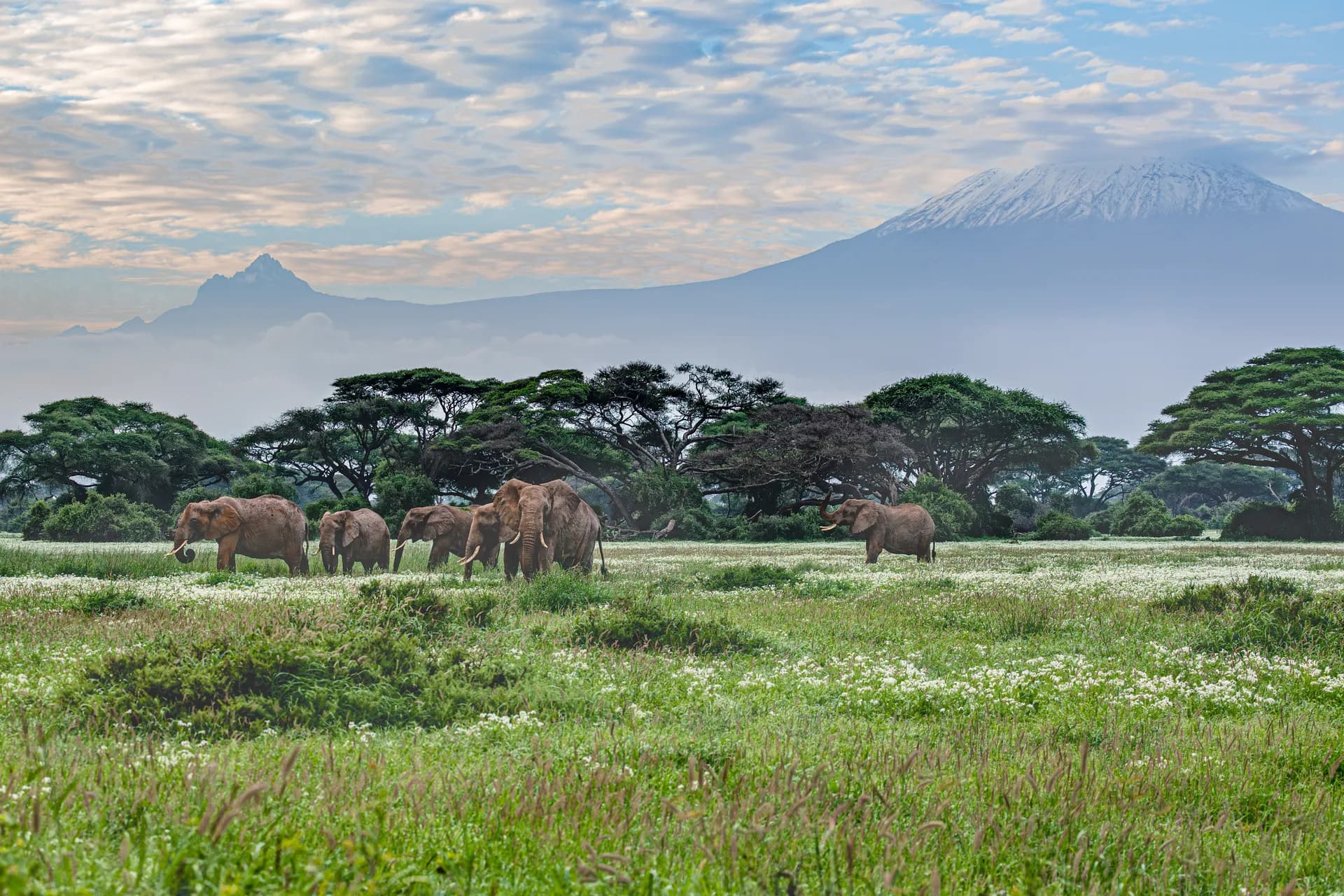
Kilimanjaro, five climates up to the snow
The roof of Africa is climbed on foot, without a rope, in a week: the story of an ascent, from the Chagga banana groves to the last glaciers.
The Bijagós, an archipelago that lives by its own rules
Eighty-eight islands off Guinea-Bissau, hippos that swim in the sea, turtles by the thousand and a society that held off the Portuguese until 1930.