Egypt’s 10 essentials
Ten places drawn from our Egypt activity sheets, each with its sources, opening hours and official prices read on the ministry’s site. An editorial selection, not a score.
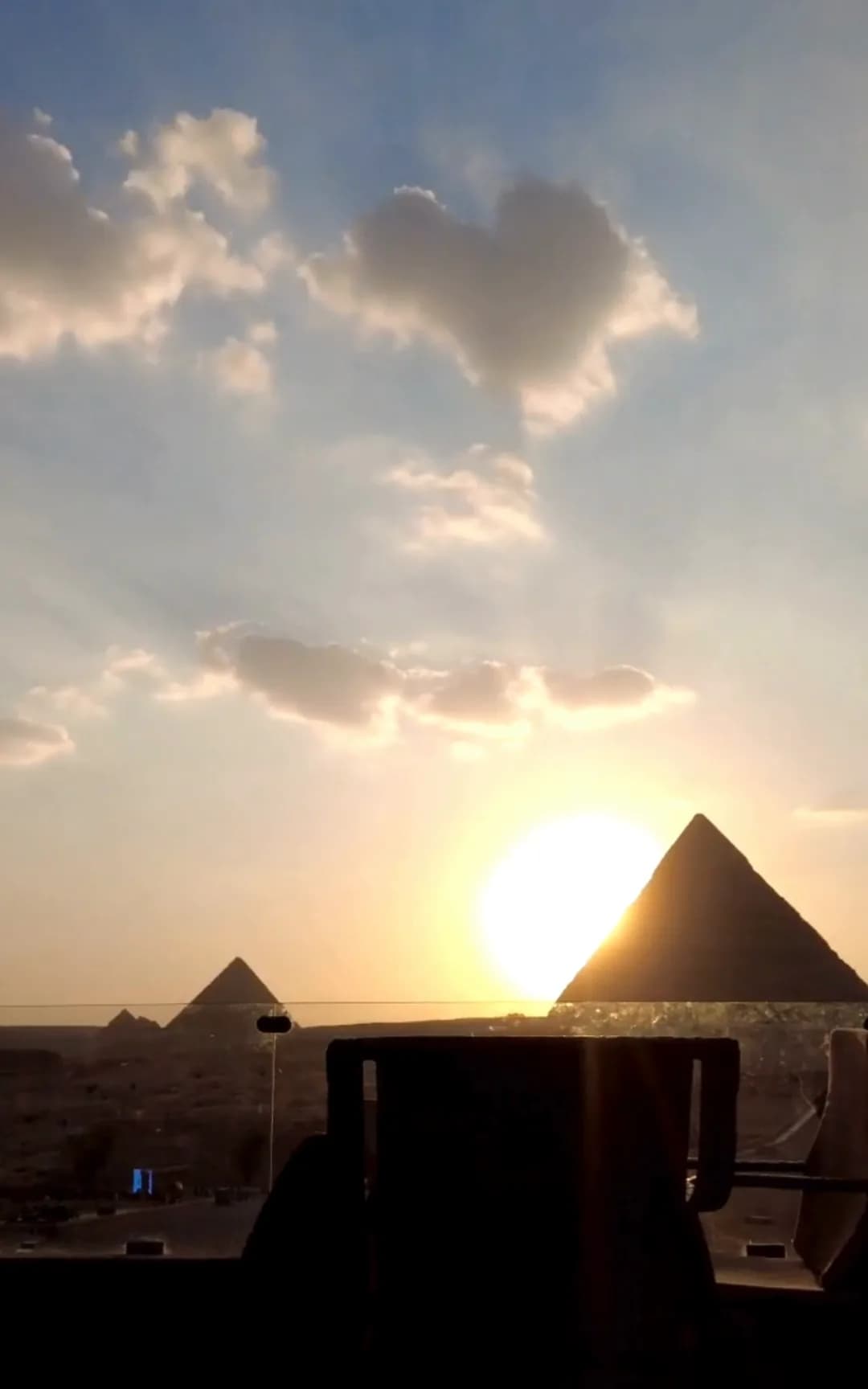
- The pyramids of Giza and the Sphinx
The Giza plateau holds the Great Pyramid, the pyramids of Khafre and Menkaure and the Great Sphinx.
The sheet - The Karnak temple at Luxor
Temples, pylons and chapels: Karnak was the main place of worship of the Theban Triad, headed by the god Amun.
The sheet - The Valley of the Kings
For nearly 500 years under the New Kingdom, rock-cut tombs were dug here for pharaohs and powerful nobles.
The sheet - The temples of Abu Simbel
Carved out of the mountainside in the 13th century BC under Ramesses II, the two temples were moved in their entirety in 1968 to escape the waters of Lake Nasser.
The sheet - The temple of Philae at Aswan
Threatened by the Aswan dam, the temple of Philae was dismantled and rebuilt on the nearby islet of Agilkia, 12.40 m higher.
The sheet - The Khan el-Khalili bazaar
In the historic centre of Cairo, Khan el-Khalili began as a centre of trade in the Mamluk era and is named after one of its caravanserais.
The sheet - Sunrise from the summit of Mount Sinai
Mount Sinai rises to 2,285 m near the town of Saint Catherine, with the 6th-century Saint Catherine’s Monastery at its foot.
The sheet - The reefs of Ras Mohammed in the Red Sea
At the southern tip of Sinai, between the Gulfs of Suez and Aqaba, Ras Mohammed has been a marine reserve since 1983.
The sheet - The White Desert from Farafra
In the Farafra depression, the White Desert lines up large white chalk rocks shaped by wind and sand.
The sheet - Alexandria’s harbour and the Citadel of Qaitbay
At the entrance of Alexandria’s eastern harbour, on the former Pharos Island, Sultan Qaitbay had his citadel built from 1477 to 1479.
The sheet
Plan the trip
Our recommended partners
One link per need, chosen for reliability. Prices and availability are the partner’s, in a new tab.